Tuesday, 28 November 2017

Unit 2 aha

Image result for audio lingual method

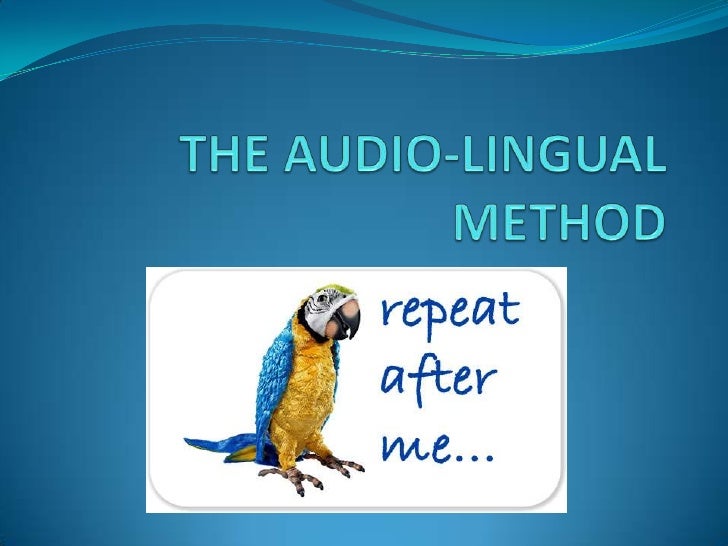
My aha moment for unit 2 was that reading about so many types of grammar methodologies, which I was very fascinated about because I didn't even know that there are so many of these methodologies. The one which I found the most interesting among all would have to be the audio lingual method (despite the fact that the teacher is central in this type) because it really focuses on listening the language very extensively and eventually students get the hold of it and than students learn to write it, so really its focuses or improves students listening habits and at the same time they also learn the language this way.

Friday, 17 November 2017

Unit 2 activity


For new immigrants to Canada beginner level.
Inductive style
Firstly, read the paper which consists a little conversation between 2 people and then practice that conversation by talking to a partner and writing it on a worksheet.

A- which do you, prefer USA or Canada.
B- I am from Canada, so I prefer Canada over USA.
A- Canada is also bigger than USA in terms of area.
B- yes that's true USA is smaller than Canada in area.

Fill in the sheet with comparative adjectives add an er.
big turns to bigger.
small turns to
deep turns to
clean turns to

English needs assessment

Click on the link

https://www.slideshare.net/teacheryamith/needs-assessment-samples

Sunday, 12 November 2017

TESL 0110

Image result for grammar


Grammar is so important in a language that without it we cannot even make an sentence. I thought I was decent in grammar but turns out I still have a lot to learn about it.
My aha moment was from the does grammar matter video. The concept of prescriptivism and descriptivism caught my attention, because I didn't know about these concepts before. So, prescriptivism is where they think the language should follow the same way it has been used since the olden times whereas descriptivism is opposite in which they like to add new things and adaptations to a language. Language is something that is constantly changing all around the world, I think the descriptivism is better than prescriptivism because it allows you to customize it. I personally think that descriptivism is a non-judgemental approach to language which is more focused on how its spoken and written by others. Here is a link, which has some more information about prescriptivism and descriptivism.
https://stancarey.wordpress.com/2010/02/16/descriptivism-vs-prescriptivism-war-is-over-if-you-want-it/

Wednesday, 11 October 2017

Assignment 4

Age- adults
Level-beginner
Length-up to an hour 
Focus- comparing,reading, writing and speaking 

Start by drawing some characters on the board like small,tall, big, fat etc. Give them names then hand out the sheet of paper which has some characteristics of those people on the board and then call upon students to get those characters compared like John is taller then Sam by using that sheet.
Then once everyone (most of them) has gotten a turn hand to write on the board then hand out one fill in the blank sheet to everyone and get everyone to write about the characters on the board.

Like
John is              than Sam.
Sam is               than Bob.
So on...

Resources

https://www.usingenglish.com/teachers/lesson-plans/level-beginner.html

http://www.cal.org/caela/esl_resources/briefs/multilevel.pdf


Sunday, 8 October 2017

Course overview

I had really enjoyed taking this course as a whole. I thought that this course was very knowledgeable and interesting as I want to be an ESL teacher in future. I liked the assignments particularly, in that way we get to know or understand other interesting ways to do things, which I could have never imagined to think in that way (get to know others perspective). I really enjoyed the readings as well although I found some of the reading contents kind of confusing I guess that's greatly because I have never taught anyone anything yet.

Sadly enough I did miss the live sessions that's why I would say that was the only part of the course which I didn't like that much, because of the timings and also because I am taking four other in class courses as well and this is also my first time taking a TESL course so I didn't know much about these courses and how they work.

Assignment 3 group project

Assignment 3

Overview & background knowledge- This person is a middle age man who has a strong background in Hindi language which reflects in his speaking manner (the strong accent). He is good at making sentences and he knows what exactly he is talking about and he is a very confident speaker as well. Although his main problem is his weak presentation and delivery skills. He lacks proper enunciation while speaking which affects the clarity of his voice and the ability of others to understand him. This student would definitely benefit from correct pronunciation exercises

Speaking level- English high intermediate (fluent in Hindi). Has a very strong accent in his way of speaking.


Objective: Improving pronunciation by Active Listening Skills. This would improve the student’s fluency and fluidity in oral aspects of the language without breaking up the speech, and help focus on syllables, r sounds, t sounds, etc.

Time: 15 minutes

Activity Outline:

Improving pronunciation through focus on stress and intonation is one of the best ways to improve higher intermediate to advanced level English learners. At this level, students have a good grasp on the basics of each phoneme using exercises such as minimal pairs, and individual syllable stress. However, English learners at this level often focus too much on correct pronunciation of each word, rather than on the music of each sentence. To introduce the concept of stress and intonation and the role it plays in understanding, the students first need to understand the role of content and function words. Use this lesson on practicing stress and intonation to help. Next, students should learn how to use sound scripting - a way of marking up texts to help prepare for reading aloud. Finally, high intermediate level students should be capable of changing meaning through word stresses within sentences to bring out contextual meaning through pronunciation.

Benefit:

Since the student is a high intermediate level speaker, the normal speed would not hinder them and would allow them to concentrate on areas that they lack such as proper grammar, pronunciation of syllables, and hearing skills.


Some of the words that a student says that are syllabically incorrect

Some other problems with Hindi speakers and their pronunciation that we have noticed is the incorrect pronunciation of “V”, R and “W” sounds.

For example, in the audio some of the other words that he incorrectly pronounces are: Career (Care-yeer), tourism (Tour-eesm), travel (tra-wel), benefits (ban-ifits), target (tar-gate).

A script we thought would be helpful to correct another pronunciation problem which is the harsh “R’” sounds, is as follows:

R- /r/

teacher- today we will learn how to make the /r/ sounds. So lets get started, try to repeat after me (showing the mouth expressions) To make the r sound you only use your tongue and lips, tongue has to be in the middle of the mouth and tip should not touch anything.

student- am I doing it right (trilled r sound)
teacher- not quite you are still touching the tip of your tongue. Demonstrate the r sound again.
student- is it better now
teacher- yes much better. Now let’s try it out with some easy words. Run so tip of the tongue should not touch anything and it should sound like one.
student- repeats (sounds like one).

teacher- awesome you have got the hang of it.

Corrective feedback

Checking on the students for their correct pronunciation skills or their correct mouth expressions so that they pronounce the words in a better or improved way.

Helpful resources:

  • http://busyteacher.org/14916-improve-esl-pronunciation-6-fun-exercises.html 
  • Harmer, J. (2001). Chapter 13: Teaching Pronunciation. In Harmer, J. (Ed.). The practice of English language teaching (pp. 188). Essex, England: Longman.